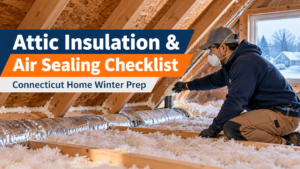
Is Your Connecticut Home Ready for Winter? An Attic Insulation and Air Sealing Checklist
Why Your Attic Deserves Attention Before the Cold Arrives
As Connecticut temperatures begin to drop, homeowners prepare their heating systems, seal drafty windows, and adjust their thermostats. However, one of the most important areas affecting winter comfort and energy efficiency is often overlooked: the attic.
Inadequate attic insulation and uncontrolled air leakage can allow heated indoor air to escape into unconditioned spaces, increasing heating demand and contributing to uncomfortable temperature differences throughout the home.
Even a high-efficiency heating system may struggle to maintain comfortable conditions when a building’s insulation and air barriers are underperforming.
Before another Connecticut winter arrives, understanding how attic insulation, air sealing, ventilation, and moisture control work together can help homeowners make informed improvement decisions.
1. Recognize the Warning Signs of Poor Attic Insulation
Homeowners do not always need sophisticated equipment to recognize potential insulation problems.
Common warning signs include unusually high heating bills, cold upstairs bedrooms, noticeable drafts, uneven temperatures between floors, and difficulty maintaining comfortable indoor conditions.
During winter, recurring ice dams along roof edges may also indicate unwanted heat escaping into the attic. However, roofing conditions, ventilation, weather patterns, and other factors can contribute.
Another warning sign is insulation that appears compressed, displaced, discolored, or wet.
These symptoms do not automatically mean the entire attic requires new insulation. They indicate that further evaluation may be worthwhile.
A professional inspection can help distinguish inadequate insulation from air leakage, moisture problems, and other building-performance issues.
2. Understand Why Air Sealing Comes Before Adding Insulation
Adding insulation without addressing significant air leakage can leave important energy-efficiency problems unresolved.
Warm indoor air may escape through openings around plumbing penetrations, electrical wiring, attic access panels, recessed lighting, and gaps where interior walls meet the attic floor.
The U.S. Environmental Protection Agency’s ENERGY STAR program emphasizes identifying and sealing attic air leaks as an important part of improving home energy performance.
Air sealing reduces uncontrolled movement between conditioned living spaces and the attic. Insulation then helps resist heat transfer through the building assembly.
These measures work together, but they perform different functions.
Professional contractors can identify appropriate sealing materials and techniques while respecting electrical clearances, combustion safety, and ventilation requirements.
For many Connecticut homes, combining air sealing with correctly installed insulation offers a more comprehensive approach than simply adding another layer of material.
3. Determine Whether Your Existing Insulation Is Adequate
Insulation effectiveness is commonly expressed through its R-value, which measures resistance to heat flow.
Higher R-values generally indicate greater thermal resistance, but the appropriate amount depends on the building assembly, existing insulation, applicable building requirements, and local climate.
Connecticut homes may benefit from substantial attic insulation, particularly when existing insulation levels are low.
However, installing more insulation is not always the correct first step.
A contractor should examine insulation depth, coverage, condition, and whether gaps or compression are reducing performance.
The material also matters.
Blown-in fiberglass or cellulose can be appropriate for many open attic floors. Fiberglass batts may work well in accessible framing cavities, while spray foam may offer advantages in certain assemblies requiring both insulation and air sealing.
The best choice depends on the specific attic design—not simply which insulation product has the highest advertised R-value per inch.
4. Protect Attic Ventilation and Moisture Control
More insulation does not automatically mean better building performance if ventilation and moisture conditions are ignored.
Many traditional vented attics rely on airflow through soffit and roof vents to help manage heat and moisture.
Blocking these vents with insulation can interfere with their intended operation.
ENERGY STAR advises homeowners to preserve soffit ventilation when insulating vented attics.
Moisture problems require particular attention.
Roof leaks, condensation, improperly vented bathroom exhaust fans, and other sources of moisture can damage insulation and surrounding building materials.
Wet insulation should not simply be covered with new material. The source of moisture needs to be identified and corrected.
Some roof assemblies are intentionally designed as unvented systems. These require a different insulation and moisture-control strategy.
An experienced insulation contractor can help determine which approach is appropriate for the home’s construction.
5. Consider the Connection Between Insulation and Ice Dams
Ice dams can form when snow melts on a warmer section of the roof and refreezes near colder roof edges.
As additional water accumulates behind the ice, it may enter vulnerable roofing areas and cause interior damage.
Excessive heat escaping into an attic can contribute to this process.
Effective attic-floor air sealing and insulation can help reduce unwanted heat transfer into a vented attic, while appropriate ventilation helps manage roof temperatures.
However, insulation improvements alone cannot guarantee that ice dams will never occur.
Roof geometry, snow accumulation, outdoor temperatures, and other conditions also influence their development.
Homeowners experiencing recurring ice dams should consider a comprehensive evaluation rather than assuming that additional insulation is the only solution.
6. Inspect Existing Insulation Before Replacing It
Older insulation is not necessarily ineffective simply because of its age.
Fiberglass, cellulose, and other insulation products can remain useful when properly installed and maintained.
The more important questions involve their present condition and performance.
Insulation affected by significant water intrusion, pest contamination, deterioration, or improper installation may need professional attention.
Before disturbing older attic materials, homeowners should also recognize potential safety concerns.
Some older homes contain vermiculite insulation that may be contaminated with asbestos. Suspected vermiculite should not be disturbed without qualified evaluation.
Electrical hazards, unsafe attic access, and exposed wiring can also make inspections unsuitable for untrained homeowners.
Professional evaluation helps determine whether insulation can remain in place, requires repair, or needs replacement.
7. Explore Connecticut Energy-Efficiency Incentives
Insulation improvements may qualify for financial incentives through applicable Connecticut energy-efficiency programs.
Energize Connecticut’s Home Energy Solutions program provides home-energy assessments and access to qualifying improvements.
Its residential insulation incentives have included support for professionally installed insulation, subject to eligibility and program requirements.
Importantly, qualifying work generally requires an assessment, project approval before installation, and use of participating contractors.
Homeowners should verify current program terms before committing to improvements. A contractor should not automatically be assumed to participate in every rebate program.
An energy assessment may also identify opportunities involving air leakage, heating equipment, and other factors influencing household energy consumption.
These findings can help prioritize improvements based on the home’s actual needs.
8. Schedule an Insulation Assessment Before Winter
The ideal insulation project begins with understanding the home’s existing conditions.
A professional assessment should consider current insulation materials, accessible attic conditions, likely air-leakage paths, ventilation, moisture concerns, and the home’s comfort problems.
Recommendations should reflect the property rather than promote one insulation product for every situation.
Some homes may need additional blown-in insulation. Others may require targeted air sealing, insulation repair, damaged-material replacement, or an appropriately designed spray foam application.
Addressing these concerns before winter can help homeowners prepare for increased heating demand and reduce the likelihood of discovering preventable problems during the coldest months.
Make Winter Comfort a Priority
A properly insulated home offers benefits beyond reducing energy consumption.
Better thermal performance can support more consistent indoor temperatures, improve comfort, and help heating equipment operate under more favorable conditions.
For Connecticut homeowners, attic insulation and air sealing deserve consideration as part of routine winter preparation.
Connecticut Insulation Services provides residential and commercial insulation solutions, including attic insulation, spray foam insulation, insulation repair, and replacement.
Our team evaluates individual property conditions and recommends appropriate insulation solutions based on performance needs, construction details, and project requirements.
Prepare your property before winter temperatures arrive.
Contact Connecticut Insulation Services to schedule a consultation and discuss how professional insulation improvements may help make your home more comfortable and energy efficient.
Call 203-724-5752 or visit CT Insulation Services.
#CTInsulationServices #AtticInsulation #ConnecticutHomes #AirSealing #WinterPreparation #EnergyEfficiency #HomeInsulation #SprayFoamInsulation #HomeImprovement #ConnecticutContractors